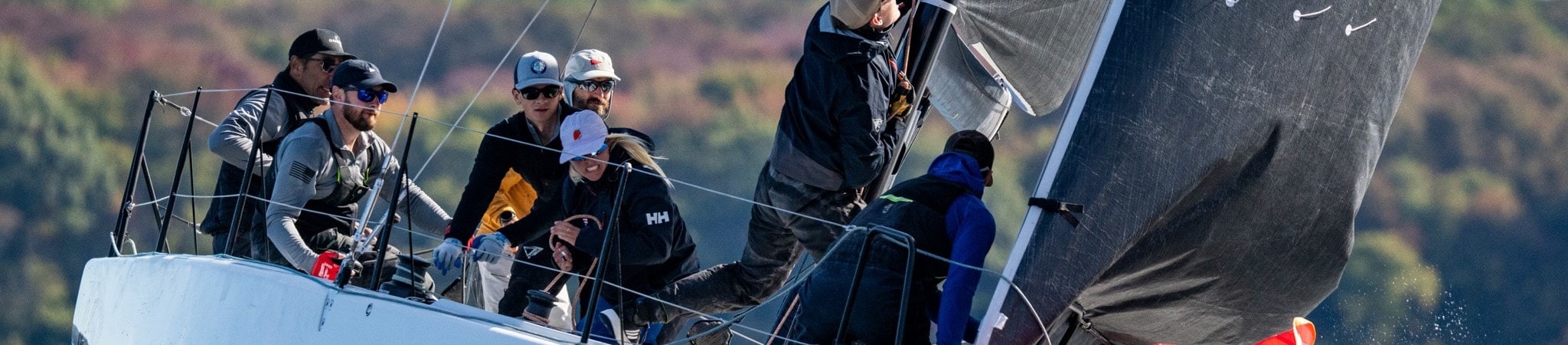
A Different Seat on the Boat
The week after the Melges 24 Worlds, Jordan sailed the IC37 North Americans aboard Peter McLennan's Gamecock with Stu McNay calling tactics and Adam Roberts on the main—and instead of his usual tactics-focused job, he was on the runners.
That put him directly into the boat-speed work. He was adjusting the running backstays through the puffs and lulls, working with Adam and the driver to manage heel and keep the boat in the right mode. With Stu able to focus on tactics, Jordan's attention could stay on making those adjustments well.
Coordinating the Runner and the Main
The runner and mainsheet adjustments needed to work together. On the breezier days, Jordan aimed to bring the runner on before the pressure arrived. Adam could then ease some mainsheet as the puff hit, trim back on as it passed, and Jordan would ease the runner coming out of it.
The communication was mostly about how much runner was on, expressed as a percentage, and whether Adam needed more or less. Stu would add a mode call when needed.
As Jordan became better at anticipating the adjustments, there was less need to discuss each one. The quieter periods reflected coordination between the two jobs, not a decision to avoid talking. When they needed to adjust the setup, they talked.
More Discussion in the Light Air
The light spots took more work. Jordan found that easing the runners too far left the mainsail leech too straight. His instinct from sailing the J/70 didn't transfer directly to this boat.
On the lighter day, Jordan and Adam used runner tension to help create the twist they wanted even when the boat wasn't fully powered. That was where they needed the most discussion. It was a useful reminder to respond to the sail shape and feel of the boat, rather than assume that the same control should be used the same way in every class.
Putting the Boat in the Mode the Race Required
The first race gave Jordan a clear example of how his job supported the tactical plan. The crew had initially wanted a pin-end start. With about two minutes to go, Stu recognized that the fleet was low relative to the line and struggling to reach it.
After a strong left shift, Gamecock was able to tack at the gun and sail toward the top mark in good pressure. Jordan and Adam set the boat up in a bow-down mode, with plenty of runner tension. The aim was to sail low and fast across the fleet and reduce the leverage to the right in case the breeze shifted back.
They led around the weather mark. For Jordan, the important connection was between Stu's call and the work required to carry it out. The tactical decision still depended on the trimmers being able to put the boat into that mode.
What We Take Back to the 49er
The IC37 is very different from our 49er, so this isn't about copying runner settings or a trimming sequence. It is about Jordan getting more time in a role centered on boat speed and understanding the demands of that job.
Grant manages main trim and much of the boat-speed work in the 49er. The better Jordan understands what Grant is trying to achieve, the better we can coordinate our own steering, trim, and communication.
Sailing with Stu and Adam also gave Jordan another example of how experienced teammates work together: clear information when an adjustment is needed, a shared understanding of the mode, and room for each person to do their job. That's the part we want to carry into our own racing.